
I want to start by giving credit where it’s due. Jeanniey Walden recently shared a thoughtful post about the craft of writing headlines and titles that actually matter—ones that draw readers in with intention and clarity. She explored how a well-constructed headline can frame an idea, invite curiosity, and help a reader decide whether a piece of content is worth their time. That conversation about the value of a strong title is an important one.
WHAT I WANT TO ADDRESS HERE IS… the misuse of that idea.
Because what we’re seeing more and more across social platforms and media isn’t simply good headline writing. It’s TITLE-BAIT… and the difference matters more than people may realize.
In today’s digital environment, far too many people react to the concept of a post instead of engaging with the content itself. A headline sparks an emotional reaction, an assumption is formed, and the response is written before the article is even read. In many cases, the headline itself becomes the entire conversation. The actual substance, “the thinking, the nuance, the context,” never really enters the discussion.
That dynamic is fueled by the growing prevalence of Title-Bait. These are headlines that promise something dramatic, provocative, or sweeping, yet barely reflect what is actually inside the piece. Big claims are made, bold hooks are deployed, the framing suggests a sweeping insight or definitive conclusion. Then, when someone reads the content, the topic is only lightly touched on, partially addressed, or sometimes not meaningfully explored at all. THAT ISN’T MARKETING… IT’S MANIPULATION.
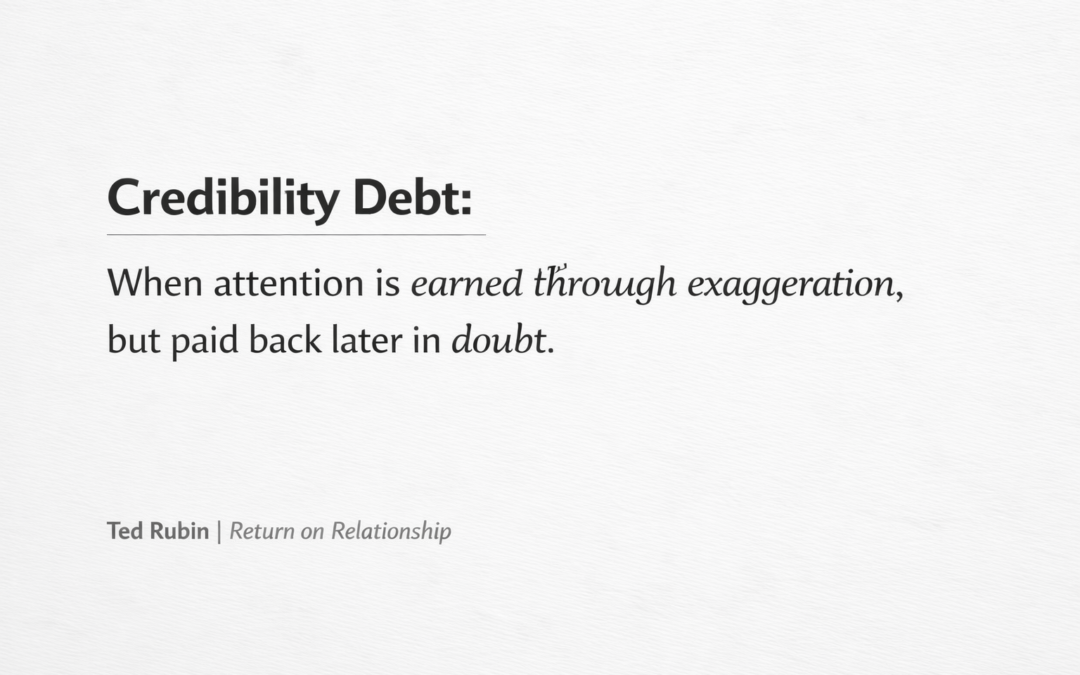
Yes, it can work in the short term. A provocative title can trigger curiosity, emotion, or outrage. It can drive clicks and reactions, and in an algorithm-driven ecosystem that often translates into more visibility. But attention captured that way comes with a hidden cost. Every time a headline overpromises and the content underdelivers, a small amount of credibility is lost. Over time, that loss compounds… THAT’S CREDIBILITY DEBT.
Part of the problem is that the system rewards it. Algorithms prioritize immediate engagement, clicks/reactions/comments, without waiting to see whether the content actually delivers. So exaggerated headlines get amplified, even when the substance falls short. That turns Title-Bait into an optimized tactic. But optimizing for an algorithm is not the same as earning trust. And over time, chasing what the platform rewards can quietly increase the CREDIBILITY DEBT you carry with your audience.
TITLE-BAIT may generate clicks… but it steadily builds CREDIBILITY DEBT.
Over time, people stop assuming that what they see in a headline will match the substance behind it. And when that happens, the skepticism doesn’t just apply to one post or one platform. It attaches itself to the voice behind the content, to the brand, and to the broader environment in which those messages circulate. You can rent attention with Title-=Bait, but you can only build RETURN ON RELATIONSHIP with substance. When you rely on exaggeration to capture interest, you’re borrowing attention you haven’t earned, and that borrowed attention eventually has to be paid back… USUALLY IN DOUBT.
A truly strong title should do something much simpler and far more powerful… it should accurately represent the value inside. It should invite someone into a conversation rather than trick them into one. The best headlines frame an idea honestly, signal relevance, and help the reader understand why the topic matters. They don’t exaggerate the insight or distort the message for the sake of a momentary spike in engagement.
ATTENTION IS EASY TO CAPTURE… RESPECT IS EARNED OVER TIME.
In a world increasingly shaped by algorithms, AI-generated summaries, and reaction-driven commentary, clarity and alignment matter more than ever. When the title and the content genuinely match, readers begin to develop something far more valuable than curiosity… they develop expectation. They come to believe that when you publish something, there will be real substance inside. THAT EXPECTATION IS TRUST… AND TRUST COMPOUNDS.
For anyone creating content today, the most important question isn’t whether a headline will get clicks. The real question is whether it strengthens or weakens credibility with the people you most want to reach. Because the long game isn’t about momentary attention… it’s about building relationships with an audience that believes your voice is worth listening to.
RELATIONSHIPS ARE THE TRUE CURRENCY… AND CREDIBILITY IS THE BALANCE SHEET. Build it carefully, because once you’ve accumulated too much CREDIBILITY DEBT, it becomes “very difficult to earn trust back” at the level you once had.
__
P.S.The Liftoff Trust Index (a free Trust Index Score)… Discover how visible, credible, and trusted your brand really is. Get your Trust Threshold Score powered by Jeanniey Walden’s AIR Method™.